Interview with Andrew Kozma | Author of Orphanotrophia
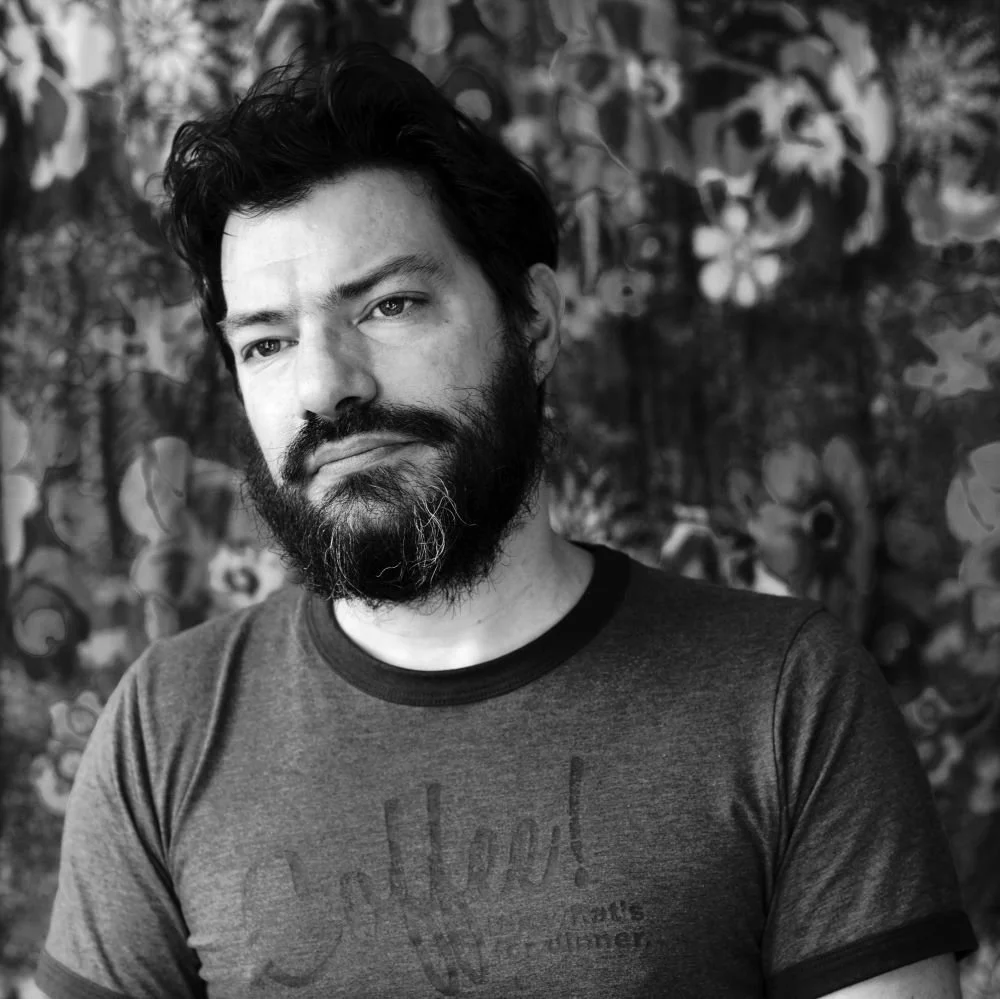
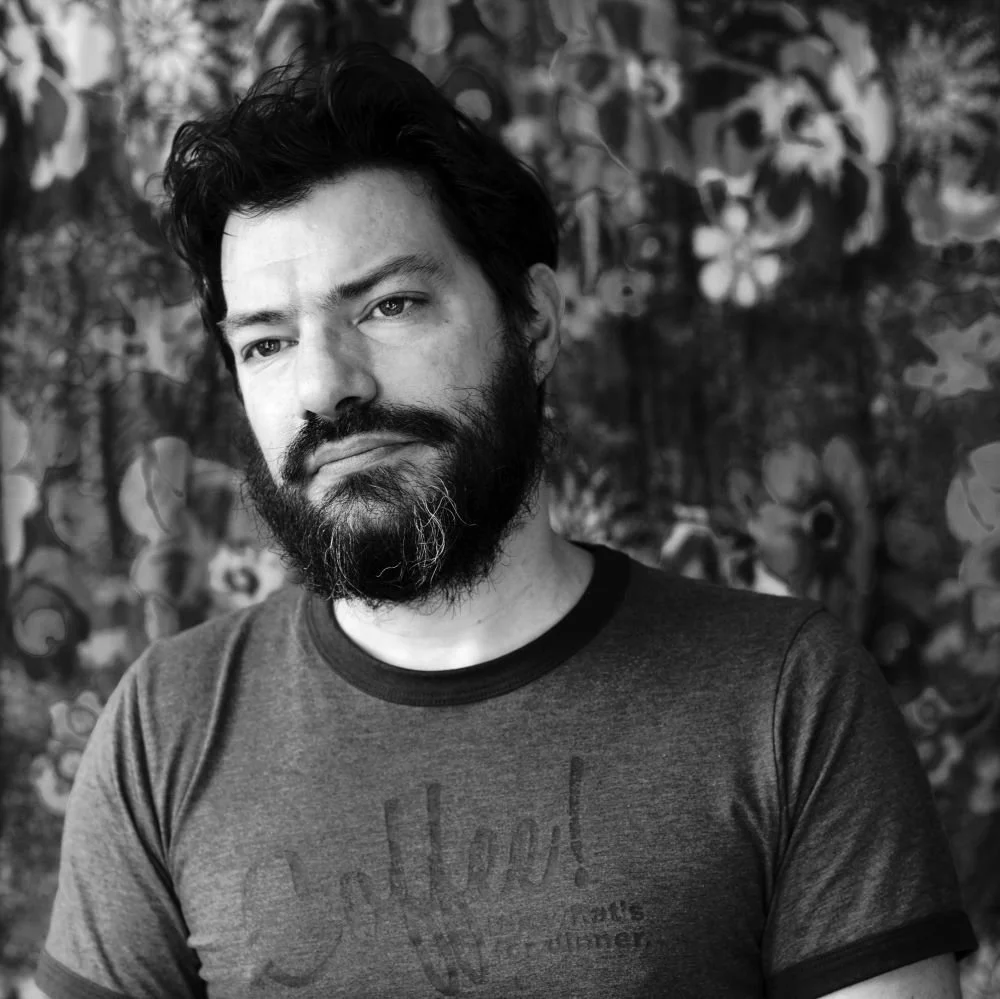
A chat about writing with weird fiction author, Andrew Kozma. (Photo courtesy of the author.)
The first Andrew Kozma short story I ever read was “The End of the Middle” in Apex Magazine. Here’s the premise: A guy shows up at his friend’s door sporting a mysterious hole in his torso. It’s a weird, charming, and surprisingly tender story about letting go of a life you realize you don’t belong in anymore. The story, as well as Kozma’s haunting voice, instantly left me craving more.
So, into the Kozmaverse I tumbled. Much to my delight, each subsequent story I discovered got weirder and weirder. A waterfall of dead souls mysteriously begins raining down on a city. A lover discovers that his new flame removes her skin at night like a wet coat. An impoverished patient considers a low-cost dental treatment consisting of—yikes—spiders. Kozma’s work is odd, mysterious and often disturbing. But through all the weirdness, the prose kept me hooked with its razor-sharp imagery and stirring observations about life.
The Houston-based author’s work isn’t limited to fiction. Kozma has also penned two award-winning poetry collections, Orphanotrophia and City of Regret. Overall, his work has appeared in a variety of respected publications like Apex, Factor Four, Analog, and Strange Horizons. Most recently, Kozma expanded his storytelling skills as a writer for Vintage Story, a sandbox survival video game with cosmic horror themes. You can learn more about him here.
Interview
Tell me about your creative process.
I’m what we writers call a “pantser”, which means I start with a line and then I keep writing until I'm done, unlike “plotters” who figure it out beforehand. I often start with a word a phrase or an image that's interesting to me and then just see what happens with that.
So, like the story “The End of the Middle.” Basically it starts with a guy showing up with a problem—he’s got a hole in his stomach. At first I didn’t know it would be the point of the story, or that there would be a plague that caused it. And then you find out the hole is everywhere—it’s in the sun and it’s spreading. The story ends with the main character crawling through the center of the hole to get to this other space. That's also not something that I knew was going to happen. I think writing is like putting together a jigsaw puzzle. I don't know what the picture is going to be until I put pieces down. With that story, I came up with the title first and then that inspired everything else afterwards.
How does writing poetry inform your prose?
I’m very image based in my poems and in my fiction. As someone who writes poetry, I'm not really interested in explaining things. I'm interested in how characters are existing in the world as it's happening. Like in “The End of the Middle”, I'm not interested in why the hole is happening or whether it's a real thing. I'm interested in the effect on the character or what sort of emotional resonance comes out of it. So that's, I think, how it works. Poetry helps me bring images and emotions to life better in my fiction.
What would you do if you weren’t a writer?
I have designed my whole life around having time to write, but when I was in college I considered for a time going into theoretical physics. Then I learned you had to do calculus and I already failed that in high school. Part of the reason I was interested in that is because I like just making up things, and in my mind that's really what theoretical physics was about. The teachers are like “here are some elements of science, now think about things that you could extrapolate from that.” I think that when I talk about writing as being like putting together a jigsaw puzzle, that's sort of another way that I think of it.
What’s your favorite story you’ve written?
My favorite story is one of the first unpublished novels that I ever wrote, The Dream Thief, which is kind of a nostalgic version of a summer camp I once went to. At some point, maybe someone will be able to read it. And the favorite story that I’ve published is called “The Librarian” which is over on Escape Pod. It’s a sci-fi story but has a lot of the absurdity and darkness that I like.
What are you reading right now?
I’m reading a book called Comix: A History of Comic Books from 1971. It claims to be one of the first academic, historical looks at comics.
What’s next for you?
At the end of next year if everything works out, me and eight other weird fiction writers (collectively called The Quotidian Unreal) are going to put out an anthology of short stories. The book will be collaboratively based in a school setting with stories that are somehow related to each other. But for now, I’m writing novels and working with my agent and trying to get them published.
If a malfunctioning teleporter pod fused you with a random movie or TV character, who (or what) would create the most inconvenient hybrid?
My most inconvenient hybrid would be with Cookie Monster, as I would not want to eat cookies all the time and would abhor the mess of crumbs, and my cats would undoubtedly use me as a scratching post.
Read more interviews with horror authors here.