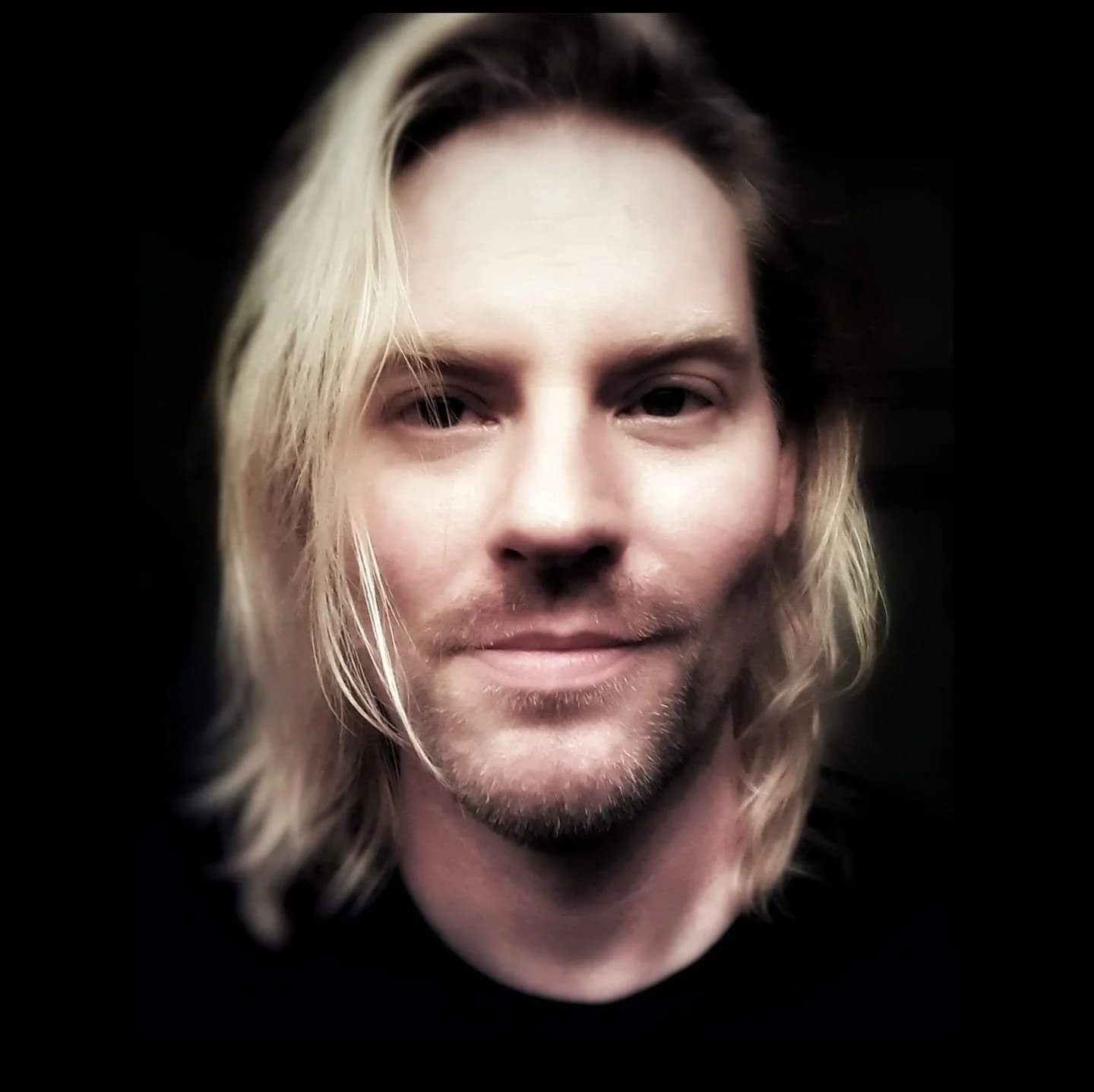
Alistair Cross, author of the Vampires of Crimson Cove series.
Some children struggle with deciding what to do with their futures, but Alistair Cross always knew he wanted to be a writer. Raised on horror novels and scary movies, he began writing his own stories at the age of eight. So, what was his first story about?
“I can recall a few early efforts involving ghosts, serial killers, and talking cats, since I’m a big cat lover,” he told me in our interview. “But I don’t remember the first one I ever told. Likely some rip-off of some 1980s horror movie I saw," he laughed. "With talking cats, no doubt.”
Regardless, the horror fuse was lit. Over the years, Cross’s love of the genre only grew, fueled by popular horror authors like Stephen King and, most importantly, Tamara Thorne, whose books he discovered before he would become her writing partner.
But it wasn’t an easy road to publication, as many writers discover, myself included. Cross collected more than 250 rejections from agents and publishers before breaking through with his first novel in 2012. That story, The Crimson Corset, delves into the world of vampires and seduction, fueling the fire inside Cross to write more. He quickly moved on to other projects, including the Vampires of Crimson Cove series, which tells the tale of a group of vampires terrorizing a sleepy mountain town.
Nowadays, Cross is equally known for his partnership with Thorne, which also began in 2012. Together, they created The Cliffhouse Haunting and the Ravencrest Saga. Similar to Cross’s Crimson Cove series, the Thorne & Cross books involve supernatural entities, but tend to focus mainly on hauntings and ghosts instead of vampires.
We chatted more, so I could learn about him as a writer, and why he is so drawn to vampires. You can learn more about Alistair Cross here.
Interview
Why do you think vampires continue to be so popular today?
Vampires have it all—beauty, glamour, drama, and above all else, eternal life. I think these things resonate with the human psyche in a way few other subjects are able to do.
There are a lot of vampire stories out in the world. What makes yours different?
I approach vampirism from an angle of addiction. I believe that addiction is a misguided search for something deeper—an effort to find something more meaningful that exists beyond the bounds of life’s surface monotony. So, to me, it makes sense that an undead being could offer that.
When I created my vampires, I couldn’t think of an explainable, semi-scientific way that the process of “turning” a person would work, so I gave them venom, which turned out to be addictive to humans. Kind of like heroin, or something comparable to that. A little of the stuff, and you just feel nice and unstoppable. Too much, and you die—and in this case, turn.
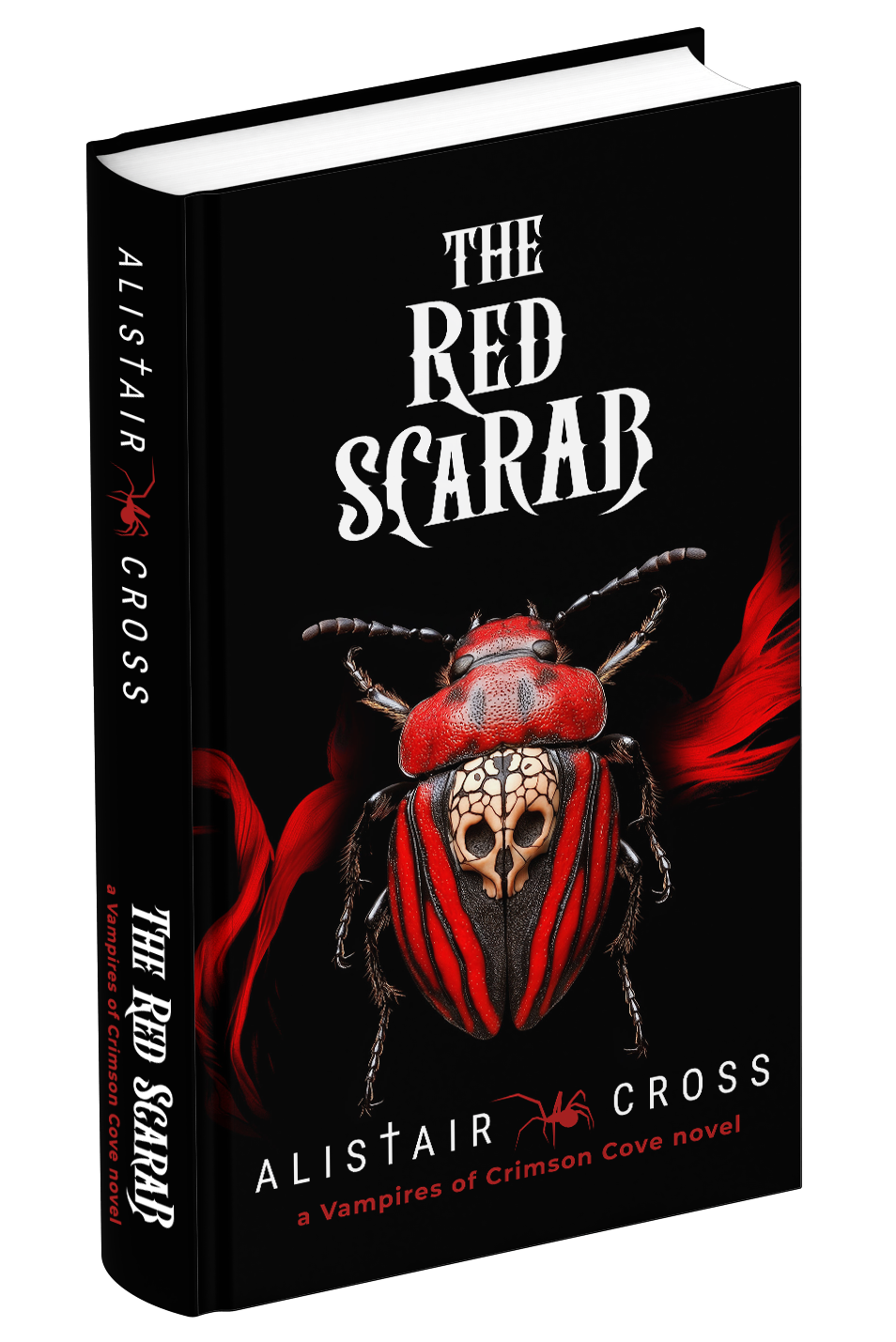
The Red Scarab, book seven of The Vampires of Crimson Cove series.
Can you talk about your collaborative process with Tamara, from that first spark of an idea to the finished book? How do you decide who does what?
It’s basically a typical 9-to-5 office job. Tamara and I live in different locations, so we work on our computers, through Teams, where we can hear each other, and in the Cloud, so we’re literally on the same page. Every day, we get on and start working on whatever Thorne & Cross collaboration we’re doing. We do that for a few hours, then move on to our respective solo works, staying online with each other for brainstorming and feedback purposes.
As for what originally sparked the idea of writing together, I’ve been a Tamara Thorne fan since I was in my teens. When I first got published in 2012, I realized I didn’t know any other writers, so I decided to conduct author interviews on my blog. Tamara was the first person I asked—and she said yes. She ended up reading the book I’d gotten published, and she liked it enough to ask me to write a short story with her.
That “short” story eventually turned into our first collaborative novel, The Cliffhouse Haunting, which, by the time we were finished, needed over 100,000 words cut just to get it down to an acceptable length for the publisher. As soon as we were done with that, we went on to the next one and the next after that.
You've written about vampires, ghosts, and psychological horrors. What scares you personally that you haven’t yet managed to turn into a story?
I’ve always thought werewolves could be very scary if handled the right way. That said, I’m not sure how I would go about writing werewolves myself, but one day, if I can find a way to put the right spin on them, I’d love to incorporate them.
You once wrote about an early teacher publicly criticizing one of your Halloween stories when you were a child. What did they say, and how did you take it? If you could sit down with that teacher today, what would you say to them?
We were all given an assignment to write a scary story, which would then be read in front of the class. When it came time to read mine, the teacher basically called it junk, said she couldn’t read it, and set it aside with a disgusted flourish. I was humiliated—but it sparked a kind of perverse satisfaction in me. I decided then and there that writing was what I was meant to do. I don’t know how to explain that. I guess I just knew I’d struck a chord that I wanted to keep striking.
As for what I’d say to her today: nothing. What do you say? I think it was just one of those things where a mean-spirited attempt on one person’s part just happened to end up having a positive effect on another person’s life.
What are some misconceptions people have about horror?
That it’s vapid and immoral. When you say “horror,” people think of blood, guts, shock, and gore, but it’s a deceptively vast genre. It encompasses everything from slashers to quiet Gothic tales about the creeping footsteps you hear in the hall in the middle of the night. It explores fear and death, and it dives headlong into the deeper mysteries of life in a way no other genre has time to do.
By its very nature, horror deals in existential conflict—it asks hard questions and demands that its readers look for the answers. Above all, horror tackles the biggest ethical dilemma out there: the difference between right and wrong. That’s far from vapid and even further from immoral.
Read more interviews with horror authors here.